
FAP Council, June 15, 2026 – Meditation: John 8:12
“I am the light of the world. Whoever follows me will not walk in darkness, but will have the light of life.”
We are approaching the summer solstice; light floods our days. Today’s text is therefore very much in line with our daily lives: “I am the light of the world,” yet it stands in a disturbing contrast to the darkness we see in our current world. This claim by Christ, when placed in the context of the Middle East, takes on even greater significance, as Christ rises above the power of the sun over life on earth and the planet.
I also choose today’s text because I recalled my horror upon hearing how the Israeli army named its violent attack on Lebanon on April 8 (one hundred strikes on the country in ten minutes): “eternal darkness”—that is what Israel sought to bring upon the country. Yes, the forces of darkness are at work, particularly in the mindset of the current Israeli government. In contrast, I naturally had in mind the magnificent, sun-drenched summer landscapes, but also all that the human spirit can produce in terms of light, illumination, and powerful radiance. I am thinking in particular of these two quotes from contemporary painters: “ Art is the highest form of hope” (Gerhard Richter), and “To paint is not to seek color, but light” (Mark Rothko).
This led me to reflect on the parallel between the purpose of light and that of Christ, and to attempt to connect these theological and physico-chemical realities with Rothko’s artistic expression.
Both in our daily lives and theologically, light serves essential purposes for us. As we well know, light creates life through photosynthesis, the activation of molecules, heat, and so on… But furthermore—from both a theological and a physical perspective:
- It helps us find our way
- It provides depth of field
- It highlights
- It allows us to distinguish what is “in front” from what comes “after”
- It does not recognize black
- It allows us to see where the shadow is
- It makes the variety and variations of colors stand out
- ….
When Christianity arrived in China in the 7th century, Chinese Buddhists gave it the name “the religion of radiant joy.”
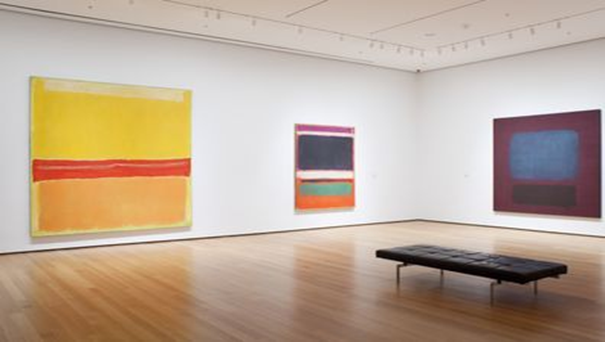
So I made the connection with Mark Rothko’s paintings.
On Wikipedia, one can find in-depth analyses of his work: here are a few excerpts:
“ The Spiritual Experience: Mark Rothko creates experiences. His monumental canvases, filled with blocks of vibrant, ethereal color, invite deep introspection. The artist invites the viewer into a silent dialogue where color emerges as the sole language capable of evoking the most primal and complex human emotions … By stripping his works of all figurative representation, Rothko freed color from its descriptive function, transforming it into the direct vehicle of emotional experience. His legacy: the conviction that art, in its purest form, can act as a portal to the depths of the soul.”
So, like a pilgrim of light, I invite you in the coming minutes to seek out the light in a world of darkness, and to simply contemplate the colors to find the light…
Go to Contempler – Serge Fornerod, then scroll down to Mr. Rothko.
June 15, 2026