
This year 2025 is ending on the same note and with the same trends as the previous one, but with the added loss of a year in which we could have made progress in resolving the cancers that plague our world: a superpower that arrogates all rights to itself, its ally in the Middle East that does the same in its region, a former superpower that negotiates with the aforementioned to remain in the ‘super’ club, the bill for the health of the planet, which is becoming increasingly heavy for our children, the growing social divide in the so-called ‘middle’ class, the worrying increase in the manipulative power of AI for governance systems. The fears that this generates benefit the parties and individuals who have the least to lose in all this...
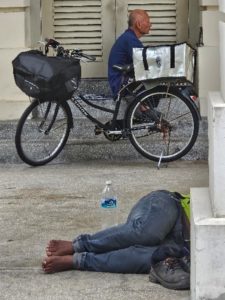
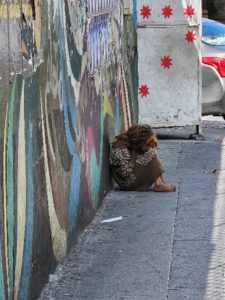
The partner churches FAP works with are experiencing these sufferings and collateral social violence head-on. I could perceive them very keenly this year through trips I have been fortunate enough to make ‘to the East’, to Lebanon, Armenia, Singapore and Japan.
In Nagasaki, eighty years after the explosion, destruction continues to haunt artists descended from the Christian Portuguese colonists.
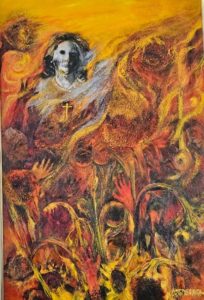
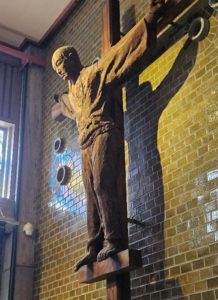
All these images add to other scandals of inhumanity, impunity and delirium of retribution worth trillions...
Yet it is also in the East and among the FAP's partners that I encountered the resistance and revolt of those who embody the refusal to resign themselves, the reflex to survive with dignity and perseverance even without the prospect of rapid change:
- A Syrian pastor who describes his situation and that of his country in these words: "It is not about seeing the light at the end of the tunnel, it is about becoming the light inside the tunnel. This means keeping the light — not until dawn breaks, but as the light itself when the horizon has disappeared. And perhaps this is what the world needs the most from the Church today.
- A Sri Lankan professor who interprets the resurrection as a divine rebellion against the powers of death.
- A traumatized refugee teacher from Nagorno-Karabakh who is rebuilding her life by selling aromatic herbs and traditional recipes to local restaurants in Yerevan.
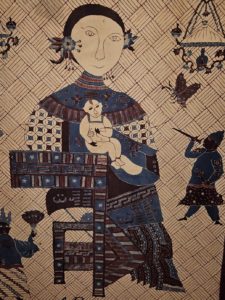
Echoing and paralleling these experiences, I had the opportunity to admire the works of many artists from all eras and cultures. There, I could read that ‘art is the highest form of hope’ (G. Richter). Art is a universal language, understandable and appreciable by all, including opponents and adversaries. Thus, Muslim emperors in India promoted and preserved many examples of local Christian art in the 16th and 17th centuries that they admired, such as this representation of Christmas.
Ex oriente lux: the Christian faith, like the sun, comes to Europe from the East. We often forget that Christianity is made up of multiple contexts. Through its modest efforts, the FAP aims to help churches and parishes welcome each year the incarnation of God’s promise in their very different contexts and to root in them its vision of a reconciled humanity and creation.
Rev Serge Fornerod
President of the Foundation for Aid to reformed Protestantism (FAP)